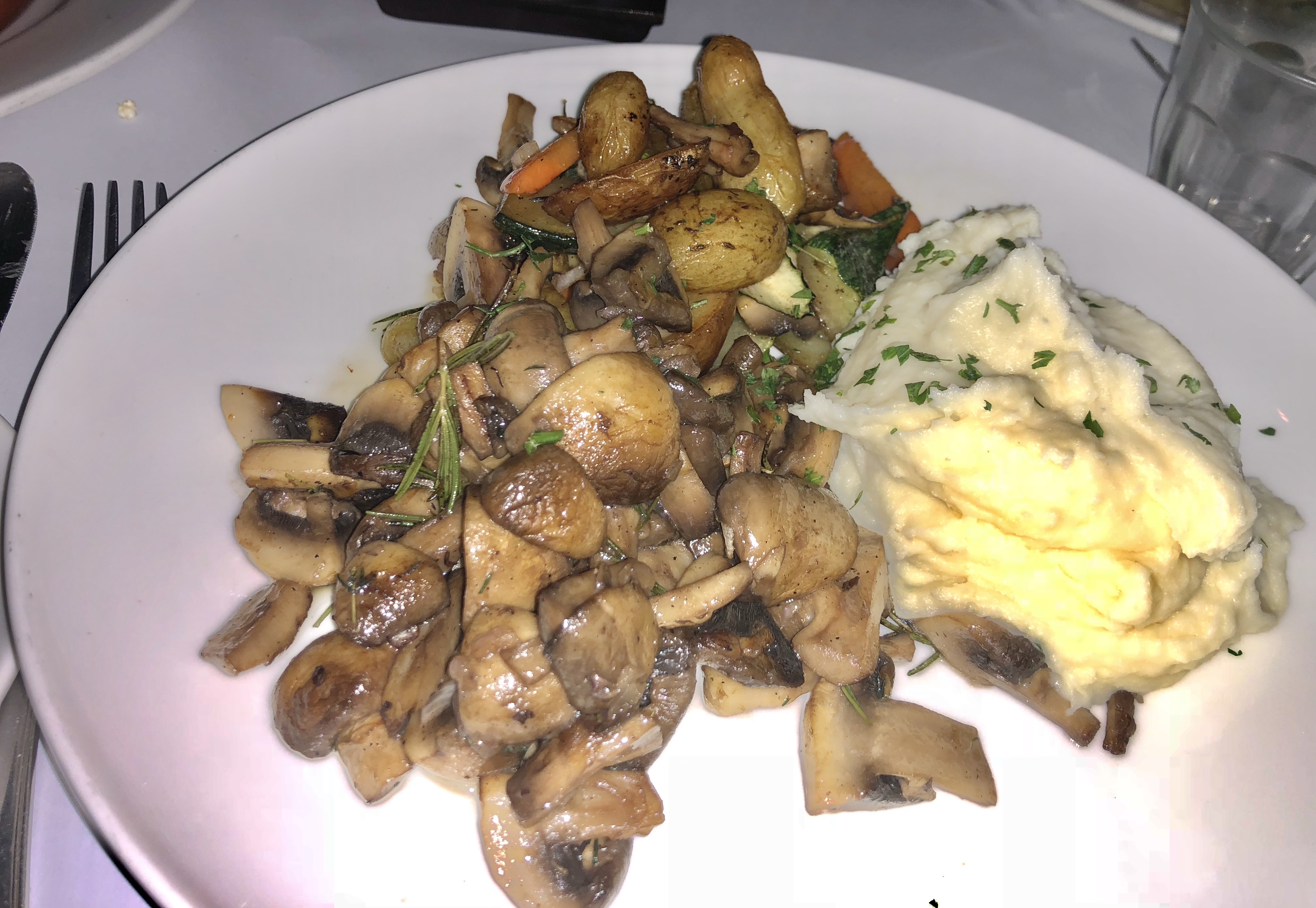
Here's to living the Ribera del Duero wine country dream! YES, a wine traveler's dream fulfilled with rich culinary experiences. Last May, I joined WineMine friends from Portugal for SweetEasy Ribera del Duero explorations. Over three days, we visited a variety of wineries, ranging from boutique to large scale producers. In addition, our adventure included traditional to modern style culinary feasts. This post will highlight the gastronomic side of our Ribera del Duero travels.

A Ribera del Duero Gastronomic Journey
For sure expectations were high for our first wine tasting at Bodegas Aalto. Bodegas Aalto has the reputation of producing some of the finest wines in Ribera del Duero and Spain. We were not disappointed because we tasted some of the top rated wines in the world.


After our Bodegas Aalto wine tasting it was off to lunch at Molino de Palacios in Peñafiel. Over lunch we enjoyed some traditional Spanish foods with Ribera del Duero wines.
Lunch at Molino de Palacios, Peñafiel

We began our gastronomic journey in Peñafiel with lunch at Molino de Palacios. Molino de Palacios is an historic place. The Valladolid diocesan archives mentions it for the first time in the 12th century. It was named Molino Quemado (Burnt Mill) at that time. In 1573, the Lords of Peñafiel bought the mill, and the Duke of Osasuna presented it as a gift to a foundation for the Study of Grammar. In 1868 Don Pedro de la Torre Hortigüela bought and rebuilt it. The latest renovation was in 1995, when it became Molino de Palacios Restaurant.

 Alcachofa (Artichoke), Molino de Palacios © Spaswinefood

Sheep ‘s Milk Cheese (Queso de Oveja), a hard cheese with a nutty flavor, is the most famous Ribera del Duero cheese, which home to many excellent cheeses. This particular cheese is commonly served with bread or crackers.
Morcilla (Blood Sausage)

Blood Sausage (Morcilla), another popular dish, is a type of blood sausage that is made with rice and spices. It is typically served grilled or fried.
Lechazo (Roast Suckling Lamb)

Roast Suckling Lamb (Lechazo), perhaps the most famous dish in Ribera del Duero, is roasted in a wood-fired oven until it is crispy on the outside and tender on the inside.
Sopa de Frijoles (Bean Soup)

Soups are a popular item on the restaurants menu. This bean soup was delicious.
Lunch at Molino de Palacios was an amazing introduction to local cuisine. We would later check into our hotel, followed by dinner.
Alma Carraovejas Collection Wine and Food Pairing at Pago de Carraovejas


Now, for a second look at the two white wines and food pairings.


The Garnacha is grown on 50-70 years old vines, the signature plantings of the winery. They reside at an altitude of 2625 feet on the hillside of Sierra de Gredos facing north. The wines is 90% Garnacha and 10% other.


It was not long before we were all settled into a fabulous gourmet lunch.


Of course the dishes that followed were delicious (photos below).


The wines served during lunch were:


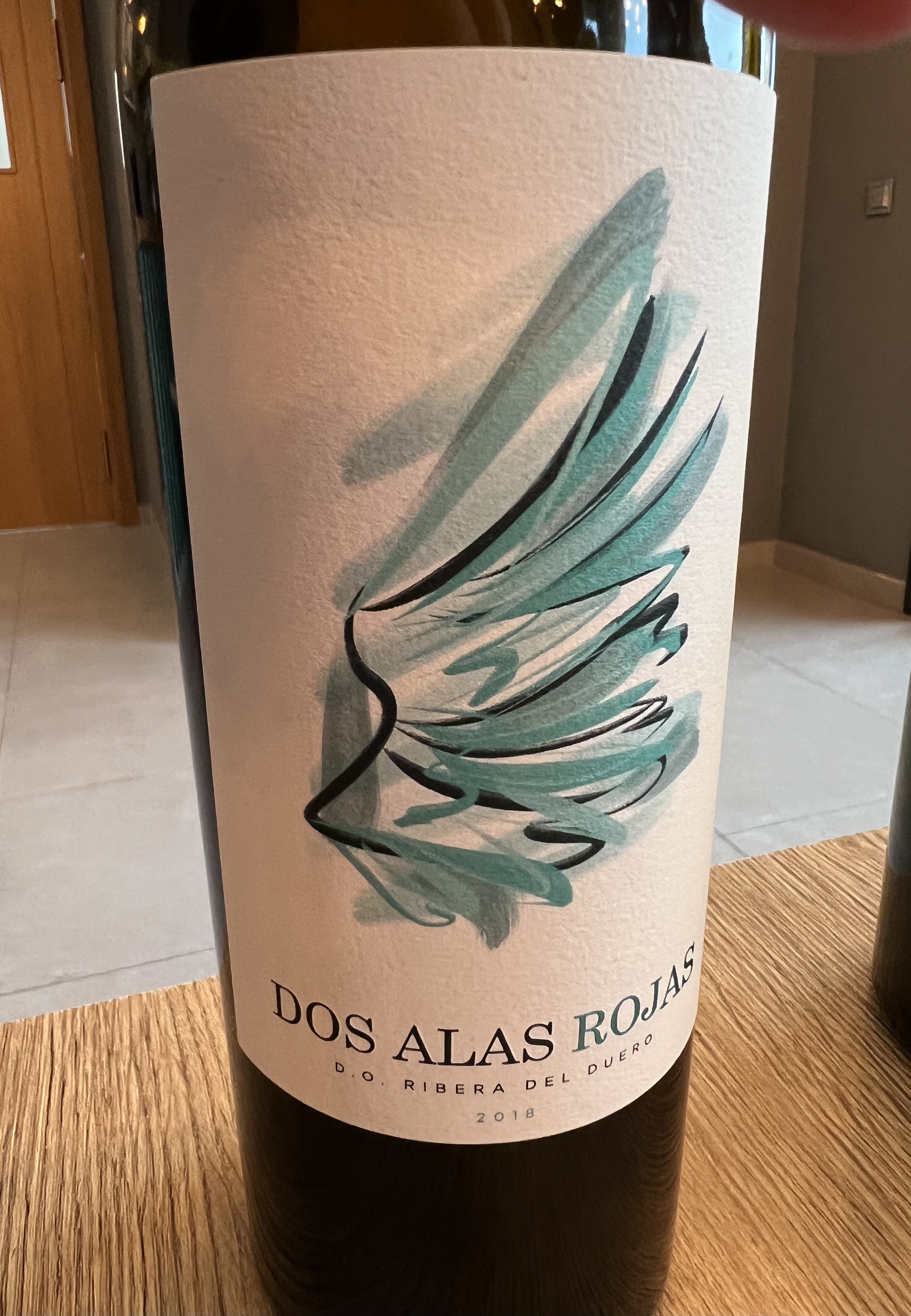

Lookout for these wines you will not be disappointed. Our overall gastronomic experience here was spectacular! Dining at Mélida's restaurant is highly recommended.


Bodegas Cepa 21 Restaurant for Wine & Food

Bodegas Cepa 21's wines and its amazing culinary offerings were the perfect backdrop to experiencing today's Ribera del Duero gastronomic scene. Bodegas Cepa 21, in the heart of Ribero del Duero region, is located in the area known as The Golden Mile. Cepa 21 was founded in 2007 as a modern project by the Moro family, brothers José and Javier Moro, third generation vignerons. Its vineyards are amongst the highest altitude vineyards in Spain, located at 2,400 – 3,300 feet above sea level. They farm 125 acres of estate vineyards, and also get their grapes from another 125 acres, which is under their management, via agreements they have with the wine growers.


Cepa 21 has constructed a modern, minimalist and functional winery. During the wine making process they utilize both the wisdom accumulated over generations and innovation to produce modern-style wines. After we toured the winery, did a wine tasting, we enjoyed the most delicious lunch.

All four red wines are produced from the same grape, Tempranillo (Tinto Fino). In fact they have their own Moro clone, which they have cultivated for more than a century. Cepa 21 aims to produce Tempranillo wines utilizing the very best of tradition and innovation.


Following the cocktail, cordial and first food pairing, what looked like a natural wine to me was introduced.


I have since discovered that Adorado de Menade is a fortified wine (15.5%) made with the Verdejo and Palomino grape varieties. It is produced by the Menade winery as a VT (Vino de la Terra) de Castilla y León. The making of this style of wine dates back to 1900's.
The next plate appeared on the table.

An orange wine was also shared.


This Orange Wine is produced from the white grape Airen that has been macerated with its skins.
A craft beer then appeared.


Then another dish arrived.

A dry Furmint wine arrived.
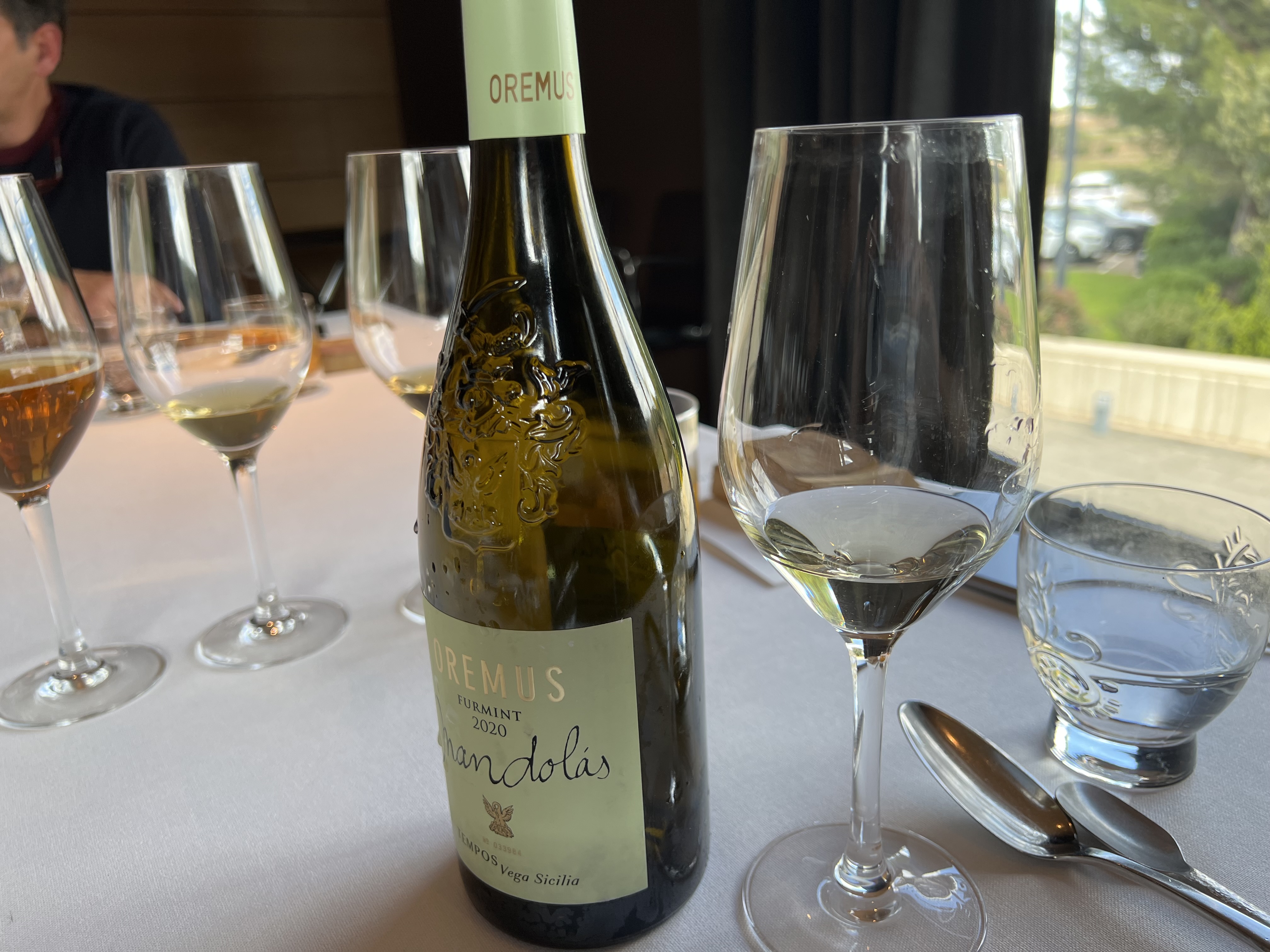


For me it was time to pause and reflect on the wines before dessert.

Wine Time Reflections, Cepa 21 Restaurant © Spaswinefood

Soon dessert time arrived, and a sweet wine too!

Menade, Sauvignon Blanc Dulce, VT de Castilla y León 2021

The second wine poured from Menade was a sweet Sauvignon Blanc. The very first wine was Adorado de Menade. Yes, we began and ended the lunch wines with VT de Castilla y León wines from Menade.

Lunch at Cepa 21 Restaurant was beyond awesome. I highly recommend it. While at Bodegas Copa 21 Restaurant I tasted their wines, and ate the most delicious lunch. Lunch was an excellent modern style cuisine and wine pairing affair. The wine selection poured during lunch included wines other than Copa 21 wines. There was also a special beer and drink included in the dining experience.

Indeed, I am delighted to have experienced today's Ribera del Duero first hand. Moreover, I so enjoyed our gastronomic intro to its traditional to modern style cuisine.


Also, wherever we travelled there were red poppies.


Ribera del Duero DO
Ribera del Duero DO is located in northern Spain's Castilla y León region. There on the northern plateau of the Iberian Peninsula, along the sides of the Duero River, the wine region occupies the southern plains of Burgos province, extends west to Valladolid, and into parts of Segovia and Doris provinces. The appellation received DO status in 1982. In 2008, it was approved for Denominación de Origen Calificada (DOCa) status however, it never pursued this classification, so it remains a DO appellation. It is one of Spain's best red wine regions. It is known for its Tempranillo (Tinto Fino), which is often blended with Cabernet Sauvignon, Merlot and Malbec, up to 25 %. The appellation is almost exclusively red and rosado (rosé) wines. To be recognized as DO, its red wines must contain a minimum of 75 % Tempranillo. No more than 5 % Garnacha or Albillo, in total, may be added. Its Rosado wines must have a minimum of 50 % of the authorized red varieties. The white wine produced, mostly for local consumption, is Albillo. DO regulations require at least 75 % of Albillo grapes be used.
Spring time was great timing to checkout the wines, the cuisine and admire the landscape, dotted with poppies.
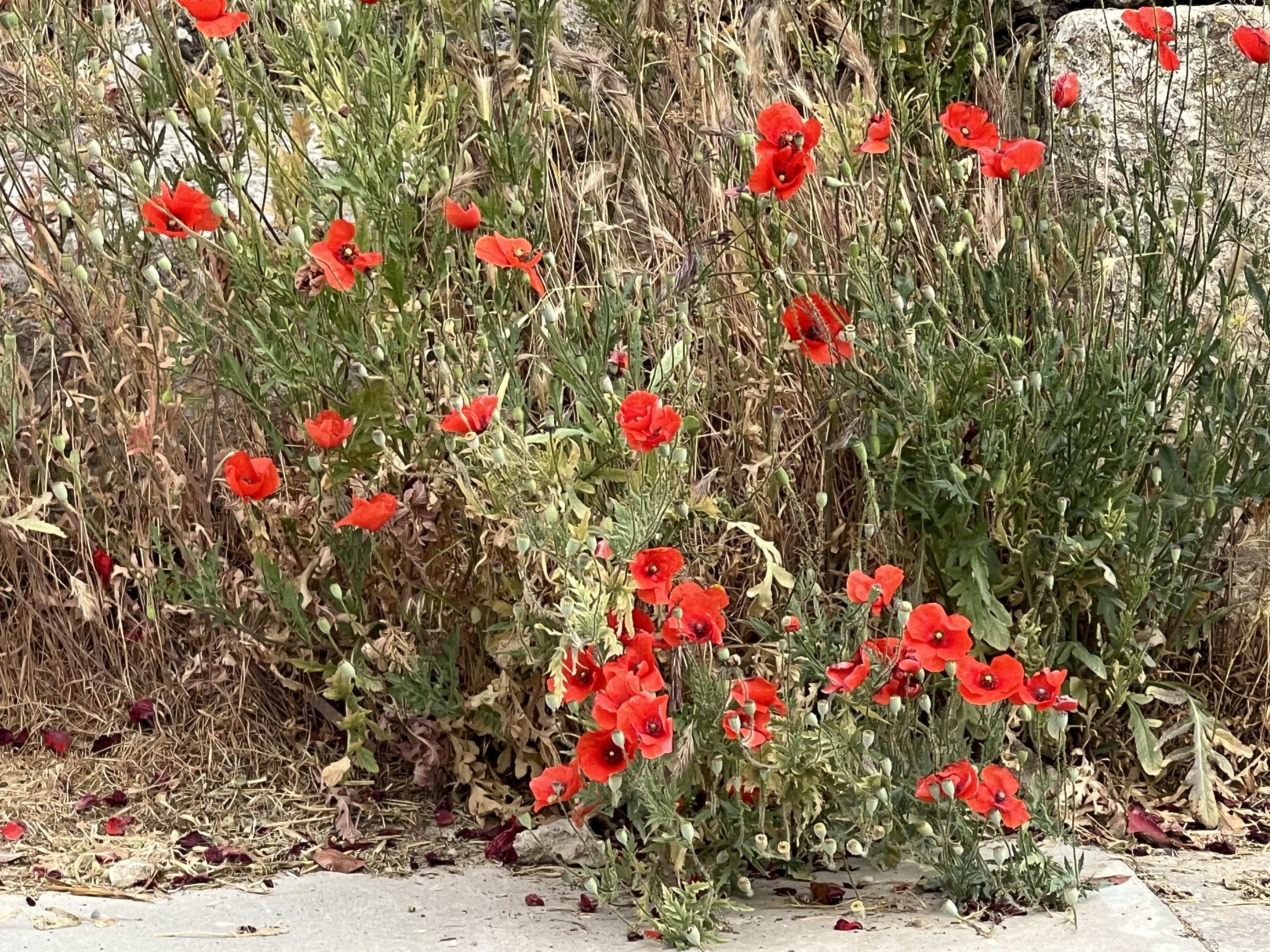
Poppies of Spring Time, Ribero del Duero Poppies © Spaswinefood