Tuesday, June 24, 2025

Slovenia: Wine country travels in the Vipava Valley

I have been wanting to visit Slovenia wine country for awhile now; so when the opportunity came last April, I knew it was perfect timing. Indeed it was a perfect fit for us after our visit to Croatian wine country. We booked three nights in historic Ljubljana with plans to explore nearby wine country. First, we took a day to settle into Ljubljana. Next day, off we went on a wine lover's journey to the enchanting Vipava Valley.

Vipava Valley, Slovenia © Spaswinefood
Before introducing to our travels in Slovenia here is an introduction to Vipava Valley (Vipavska Dolina).

Slovenia Wine Country
Slovenia has three wine regions. Vipava Valley is within the Primorska wine region. There are no appellations within the Primorska region however, there are various districts where winemaking techniques and the wine produced differ. The winemaking districts of the Primorska wine region include Vipava, Slovenian Istra , Goriska Brda, and Karts. The Vipava area (3005 ha) is commonly known for producing light and crisp white wines made from Pinela and Zelen grapes. In addition, we were excited to discover its orange and amphora wines.

Vipava Valley(Vipavska Dolina) has been known as a wine-growing region for centuries. Not only has wine growing has been deep-rooted tradition here but also, new innovations have also emerged. It is one of Slovenia's most successful wine regions. We visited a region with beautiful green rolling hills that benefit from good soils, a mild climate, and rain. Despite its distance from the coast, this region has a Mediterranean climate. Moreover, the Vipava River flows across the region, and onto the Adriatic Sea. Visitors to the Vipava Valley will experience quality Vipava wines, which are enriched by the sun and the bora wind. Yes, we heard about the strong bora winds that sweep through the valley.

The Vipava Valley, since Slovenia's independence in 1991, has experienced growth in its wine industry.  It is a very dynamic wine region, with winemakers constantly experimenting with grape varietals and the winemaking process. In addition to successfully growing numerous well-known international wine varieties, it is also home to special grape varieties. These include: (1) the indigenous Zelen, which is very popular among the locals, (2) Pinela, an old wine variety, found only in the Vipava Valley, (3) Klarnica, a “boutique” wine variety, which has been revived again, and (4) other wine varieties. 

Vipava Valley, Slovenia © Spaswinefood


Off to Slovenia April 9-12

After our flight from Dubrovnik to Zagreb, we took a private transfer to Ljubljana on April 9th. Then for our transfer from Zagreb, Croatia to Ljubljana, Slovenia I arranged transportation via Daytrip. After the Zagreb airport pickup it was a pleasant drive to Hotel Heritage, Čevljarska ulica 2, 1000 Ljubljana, Slovenia. Shortly after we arrived in Ljubljana, I booked a wine tour to the Vipava Valley. Wine Express Tours visits winemakers at their home estate and offers the opportunity to savor the finest wines and food delicacies. In their description I was impressed by this statement: Sustainability and purity are the two words that best describe this tour. 


When met at mid-day at our pickup point we joined four women from Finland for the wine tour. It was about a one and half hour drive to Vipava Valley from Ljubljana. Our van driver who was also the tour leader gave us an overview of what to expect. As we drove from Ljubljana to the wine valley our guide explained the major influences on the various regions of Slovenia. Along the way he would also point out significant sites, etc. It was a very relaxing spring time drive through the Slovenian countryside to the Vipava Valley.
Spring Time, Vipava Valley © Spaswinefood

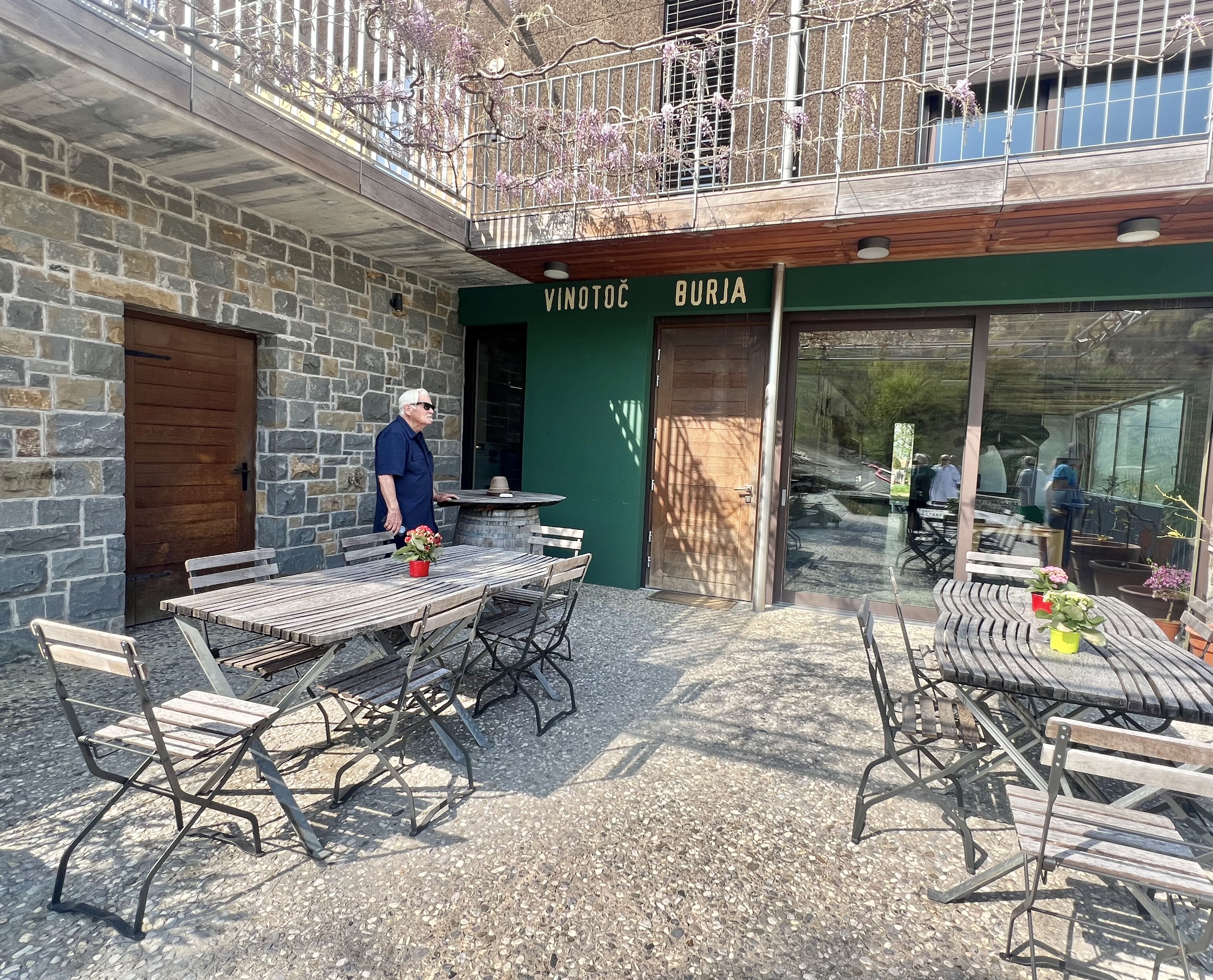
While our first Vipava Valley stop, Vinotoc Burja, was not available for a wine tasting we did make a brief stop. I was happy to get out of the van and explore a little.
Vinotoc Burja, Vipava Valley © Spaswinefood
Patio Time, Vinotoc Burja © Spaswinefood
This winery has an inviting patio area, with tables ready to future visitors. 
Tanks on the Patio, Vinotoc Burja © Spaswinefood
The Vipava Valley is know for its biodynamic wine growing. Vinotoc Burja proudly display its Demeter certification as a biodynamic estate.
Vinotoc Burja © Spaswinefood
After a brief stop we continued our tour. Along the way we passed by vineyards, eventually reaching higher elevation with great views of the valley.
Welcome to Vipava Valley  Wine Country © Spaswinefood
Guerila Wines
We stopped for our first wine tasting at the Guerila Winery. This modern winery is located at the top of Planina Village, just above Koboli. From the winery you get stunning views of the Vipava Valley, views of Nanos slopes, and Caven and Trnovo Plateaus. Guerila practices biodynamic wine growing.

Guerila Winery © Spaswinefood
Guerila Family Estate © Spaswinefood
Guerila Winery © Spaswinefood
Upon arrival we were indeed excited to visit our first Slovenia wine cellar.
Entrance to Guerila Winery © Spaswinefood

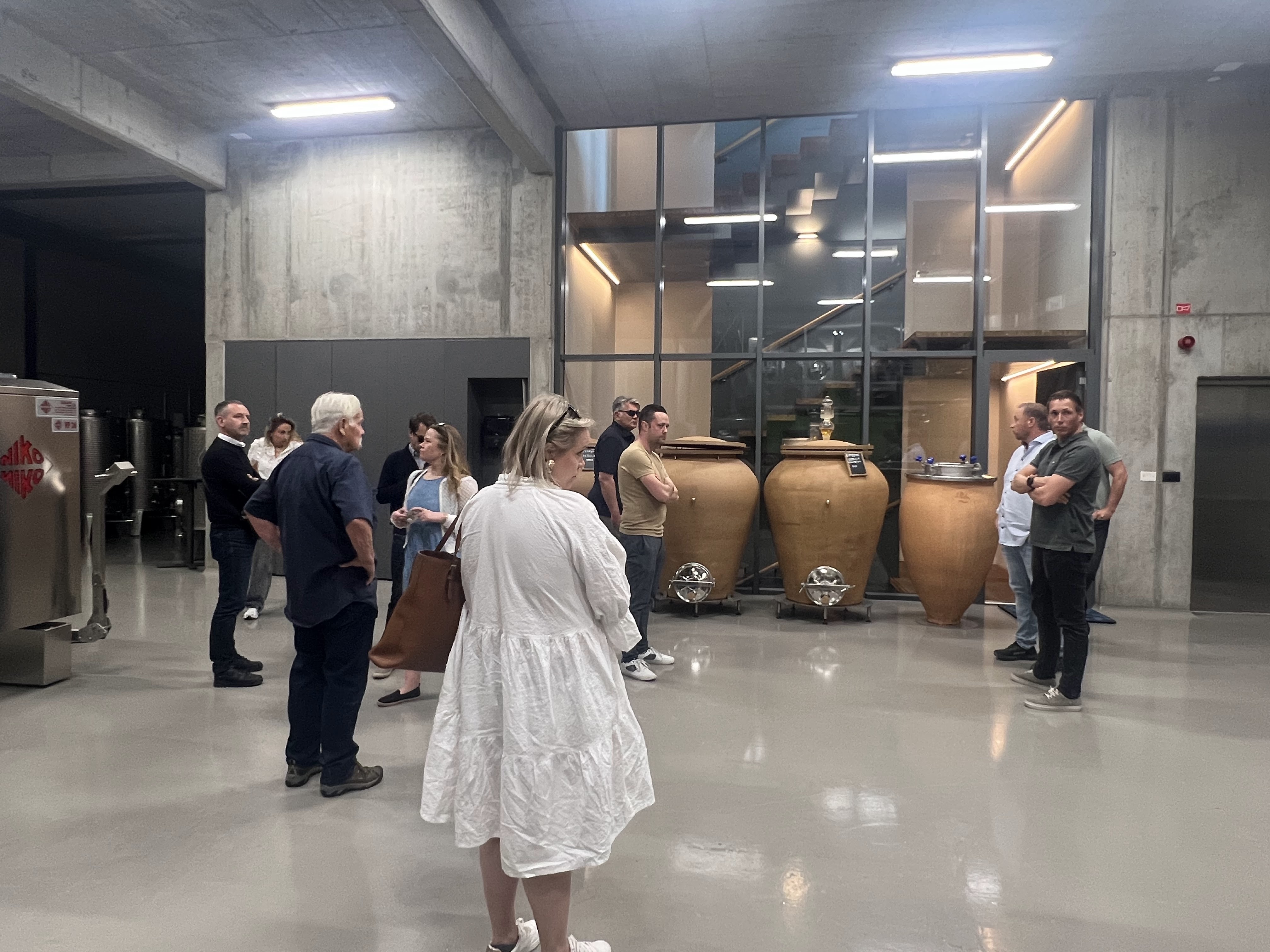
Upon arrival at the winery we were warmly greeted and taken on a short winery tour.
Touring Guerila Winery © Spaswinefood
Wines on Display, Guerila Winery © Spaswinefood

We stopped briefly in the barrel room.
Barrel Room, Guerila Winery © Spaswinefood
Exploring Guerila's Barrel Room © Spaswinefood
We were introduced to the bedrock, which is typical of area.
Taking Closer Look at the Bedrock, Guerila Winery © Spaswinefood
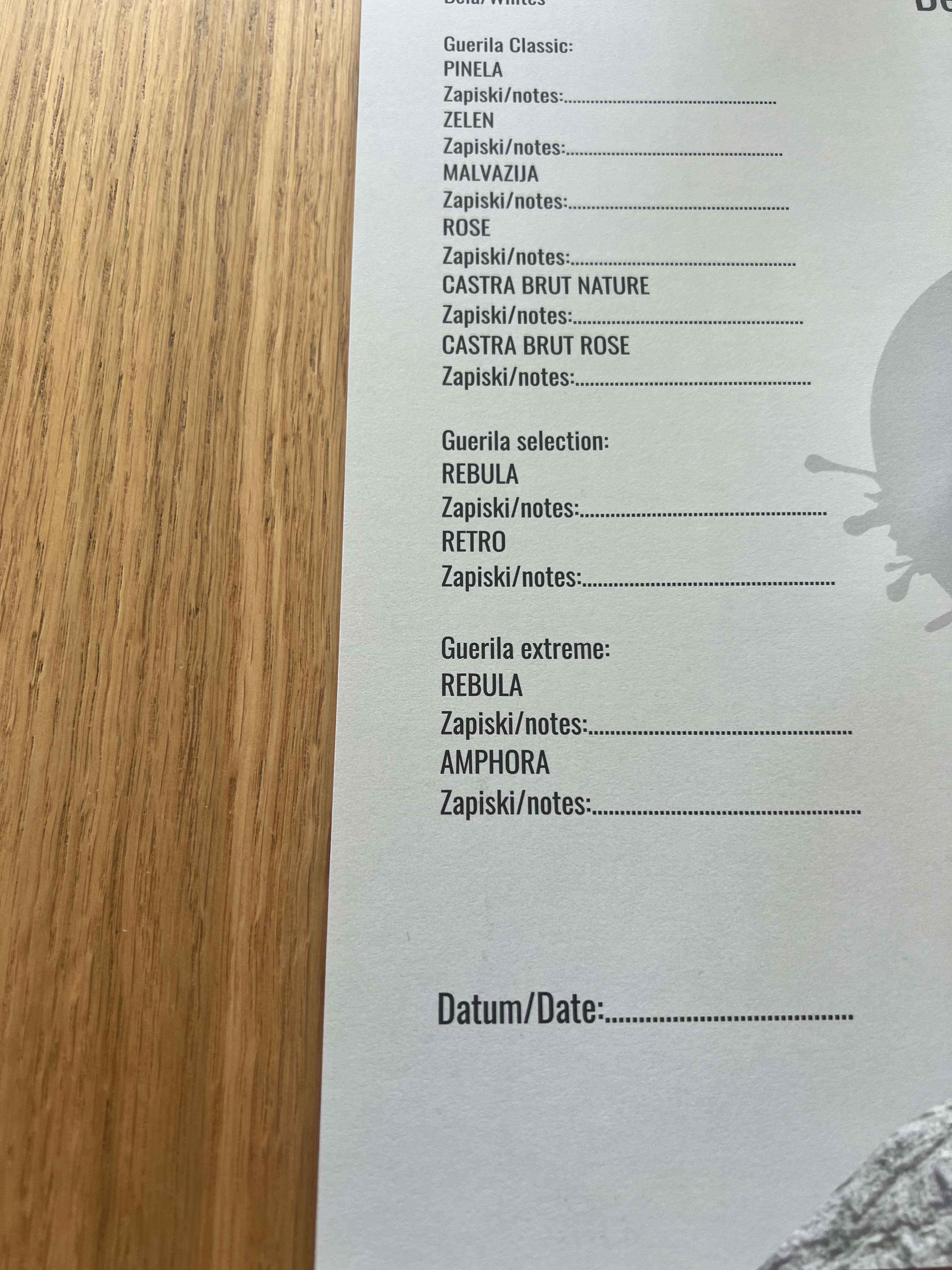
Guerila produces three line of wine: classic, selection, and exteme. When we returned back upstairs we began the tasting with a sparkling wine, their Castra Brut Nature. This wine was the perfect wine to begin the tasting.
Guerila Winery © Spaswinefood
The indigenous Zelen and Pinela grapes are used to make Castra Brut Nature.

Soon food platters appeared on the table.
Cheeses and More, Guerila Winery © Spaswinefood
It was so delightful to discover the Guerila wines. This was our first time to taste Vipavska Dolina (Vipava Valley) wines.
Discovering Guerila Wines © Spaswinefood
A Closer Look: Guerila Wines © Spaswinefood
Guerila, Pinela Vipavska Dolina 2023
Guerila, Pinela Vipavska, Dolina 2023 © Spaswinefood
Guerila, Pinela Vipavska Dolina 2023 © Spaswinefood
Pinela is one of the wines we tasted produced from the indigenous grape Pinela (an old wine variety) found only in the Vipava Valley.

Guerila Selection Reto, Vipavska Dolina
Guerila Selection Reto, Vipavska Dolina © Spaswinefood

This white wine is made from Malvasia, and Zelen (an indigenous grape). Wine made with Zelen is very popular among the locals.

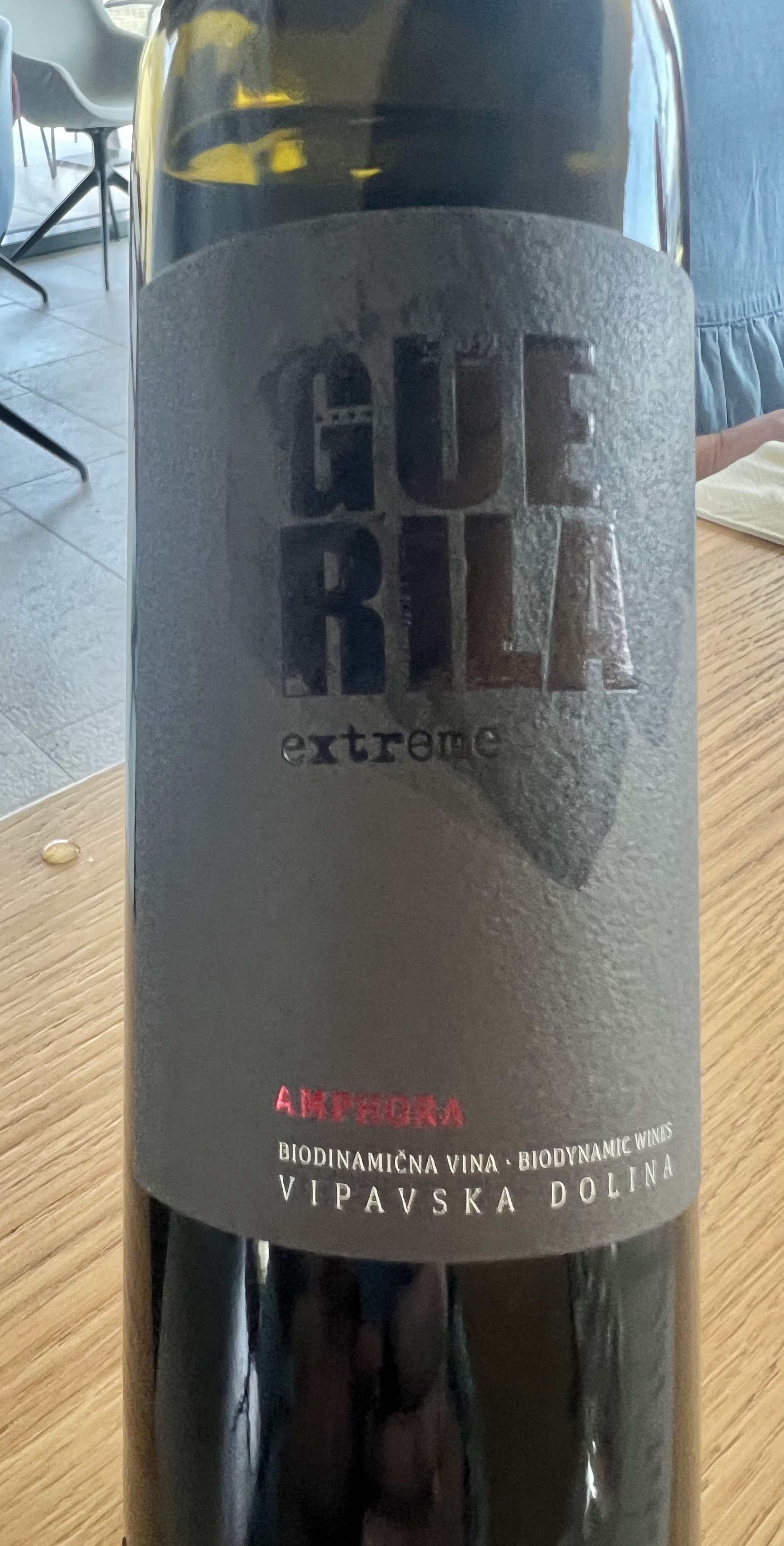
Guerila Extreme Amphora, Vipavska Dolina 
Guerila Extreme Amphora, Vipavska Dolina © Spaswinefood
Guerila Amphora Extreme is a natural Orange Wine made from Rebula grapes.  They also have a Guerila Amphora Extreme Red made from Barbera grapes.
In the Glass, Guerila Amphora Extreme © Spaswinefood

We enjoyed our wine tasting of wines made with indigenous grapes, orange and amphora wines. 

Those looking for a comfortable accommodations in the heart of the Vipava Valley Guerila Winery has three modern apartments.

Darovi Vipavske Tasting Room, Vipavski Križ
Our second winery stop took us to Vipavski Križ, a medieval town (one website described it as the second smallest in the world). I have no idea if this description is accurate (second smallest town in the world) however, it is definitely a lovely small town. This historical town is very inviting, just check out its history and wine events held here throughout the year. It certainly made me want to return.

Vipavski Križ, Vipava Valley, Slovenia © Spaswinefood
Exploring Vipavski Križ, Slovenia © Spaswinefood
We stopped by Darovi Vipavske (a wine shop, wine bar, bistro, tasting room, and shop for local products).
Darovi Vipavske © Spaswinefood
Here we sat around a barrel and explored more Vipava Valley wines.
Wine Tasting, Darovi Vipavske © Spaswinefood
To go along with the wines we were served a very tasty food platter.
Food Platters, Darovi Vipavske © Spaswinefood

It was an exciting lineup of Slovenia wines produced from indigenous grapes, and orange and amphora wines. Yes, there was a Simon Wolfe book on display and we were told he visited there.

Amongst the wines we tasted there were a number of wines produced from Zelen, the indigenous grape, that I have referenced in this article. For example Furlan, Zelen, Vipavska Dolina 2023 (see Vivino) 

Furlan, Zelen, Vipavska Dolina 2023
Furlan, Zelen, Vipavska Dolina 2023 © Spaswinefood

After a very lovely wine tasting at Darovi Vipavske we retuned to Ljubljana. We left taking with us those wonderful memories of the Vipava Valley landscape.

Spring Time Vineyards, Vipava Valley © Spaswinefood

Vipava Valley amidst the picturesque Karst landscapes is where Mediterranean air meets the cold Alpine slopes. This is a region is renowned for its rich winemaking tradition and stunning natural beauty. As we drove through the valley we passed by villages, which were centered around church towers.

Taking in the Views, Vipava Valley, Slovenia © Spaswinefood

Vineyards were already showing signs of early spring growth.

Spring Time Flowers: Vipava Valley Vineyard © Spaswinefood


We were impressed by Vipava Valley and its wines
. The Vipava Valley Wine Express Tour From Ljubljana was a fabulous introductory tour for us. For those interested in trying Slovenia wines you can research their availability in the US at Total Wines and Vivino. I invite you to join me in my wine travels in Slovenia and elsewhere at Wine Travels with Dr. Sharon, and at Spaswinefood on Bluesky and  Facebook. I am so looking forward to sharing more on my vine-filled explorations.

Cheers


Sharon
April 2025
Slovenia
© Spaswinefood
Wine Travels in the Vipava Valley © Spaswinefood
Vipava Valley, Slovenia © Spaswinefood

Follow me on 
Bluesky and Facebook

Sunday, June 8, 2025

Living the Croatian wine country dream: Miloš Stagnum, the first Croatian cult wine

When you have a passion for wine travels in wine country is always an adventure, even on a rainy day. I still remember that early April day when we arrived at Miloš Winery in Ponikva. It was the first winery stop on our Pelješac Peninsula journey, and YES, it was raining. Miloš Winery was the beginning of our wine adventure, which would take us through charming Pelješac Peninsula family-owned vineyards. We chose to begin our Croatian wine adventure on the Pelješac Peninsula, because besides its natural beauty, it is a paradise for oenophiles. Besides, the Pelješac is renowned for its robust red wines, Plavac Mali. 

Miloš Winery © Spaswinefood
Off on a Pelješac Peninsula Wine Adventure
That morning we were picked up in historic center of Dubrovnik and driven to Ston. Ston has a rich history with its stone walls, and salt production. Despite the weather we did a brief walkabout in Ston, and enjoyed a coffee. We loved walking about the village and discovering some of its past history.
Explore the Village, Ston © Spaswinefood
Viewing the Historic Walls, Ston © Spaswinefood

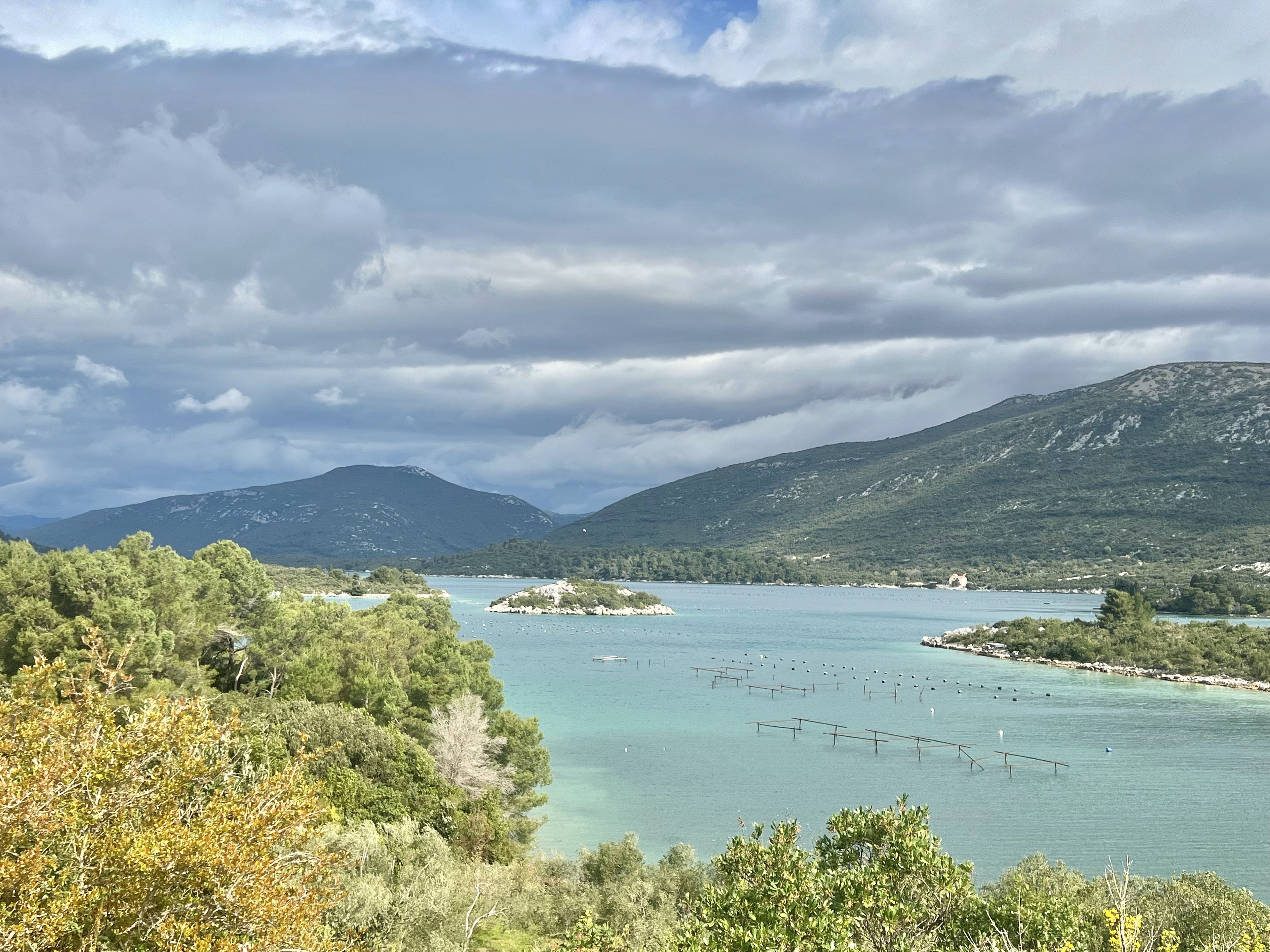
Besides it fascinating history these days Ston is know as an idyllic Adriatic oyster village. Many come to Ston to enjoy oysters.
Oyster Farming, Ston © Spaswinefood

It was just short drive from Ston to Ponikva, the home of the Miloš family winery. Miloš is one of the oldest family owned wineries on the Pelješac Peninsula, a sub-region of the South Dalmatia wine region. 

Miloš Winery
We were happy to escaped those April showers, and go inside to a welcoming tasting room.

Tasting Room, Miloš Winery © Spaswinefood

Even the rain did not dampen out spirits. Besides there was a friendly welcome waiting inside. Also, the wine glasses were ready.
Glasses Ready, Miloš Winery © Spaswinefood

Miloš  specializes in producing high quality wines from Plavac Mali, grown in organic vineyards on the manually farmed steep terraced land. We decided on tasting some of their premium wines. This included the following wines:

1. Miloš Winery, Stagnum Rosé
Miloš Winery, Stagnum Rosé © Spaswinefood
This is an expressive rosé made from old Plavac Mali vines grown on the slopes of the Peljesac Peninsula. The grapes are hand-harvested and farmed organically. Yes, I have read about the reaction when this rosé was first introduced to market.

2. Miloš Winery, Stalagmit 2022
Miloš Winery, Stalagmit 2022

The Miloš Winery, Stalagmit 2022 is produced from made Rukatac grapes in a dry orange wine style. Maraština is often the name used for (Rukatac, Maraškin, Mareština, Krizol, Višana) however, Rukatac is the commonly used name on the Dalmatian coast. 

3. Miloš Winery, Stagnum 2016
Miloš Winery, Stagnum 2016 © Spaswinefood

Even though this was my first time tasting Stagnum wines I knew it was special. I have since discovered that following the end of communism in Croatia, the Milos family was one of the pioneers pushing quality winemaking. They launched one of the first quality wine brands Stagnum, which of course is produced from indigenous Plavac Mali grapes. Influential wine journalist, Hugh Johnson and others, have called Stagnum the first Croatian cult wine.

Yes, I even got to taste a 2003 Stagnum. 

4. Miloš Winery, Stagnum 2003
Miloš Winery, Stagnum 2003 © Spaswinefood
Miloš Winery, Stagnum Wines © Spaswinefood
Critics have rated the 2003 Stagnum wine high, and yes it ages well.

Tasting these Stagnum wines certainly added depth to my rainy day introduction to Croatian wine country. What a great way to kickoff our Peljesac Peninsula wine country adventure!

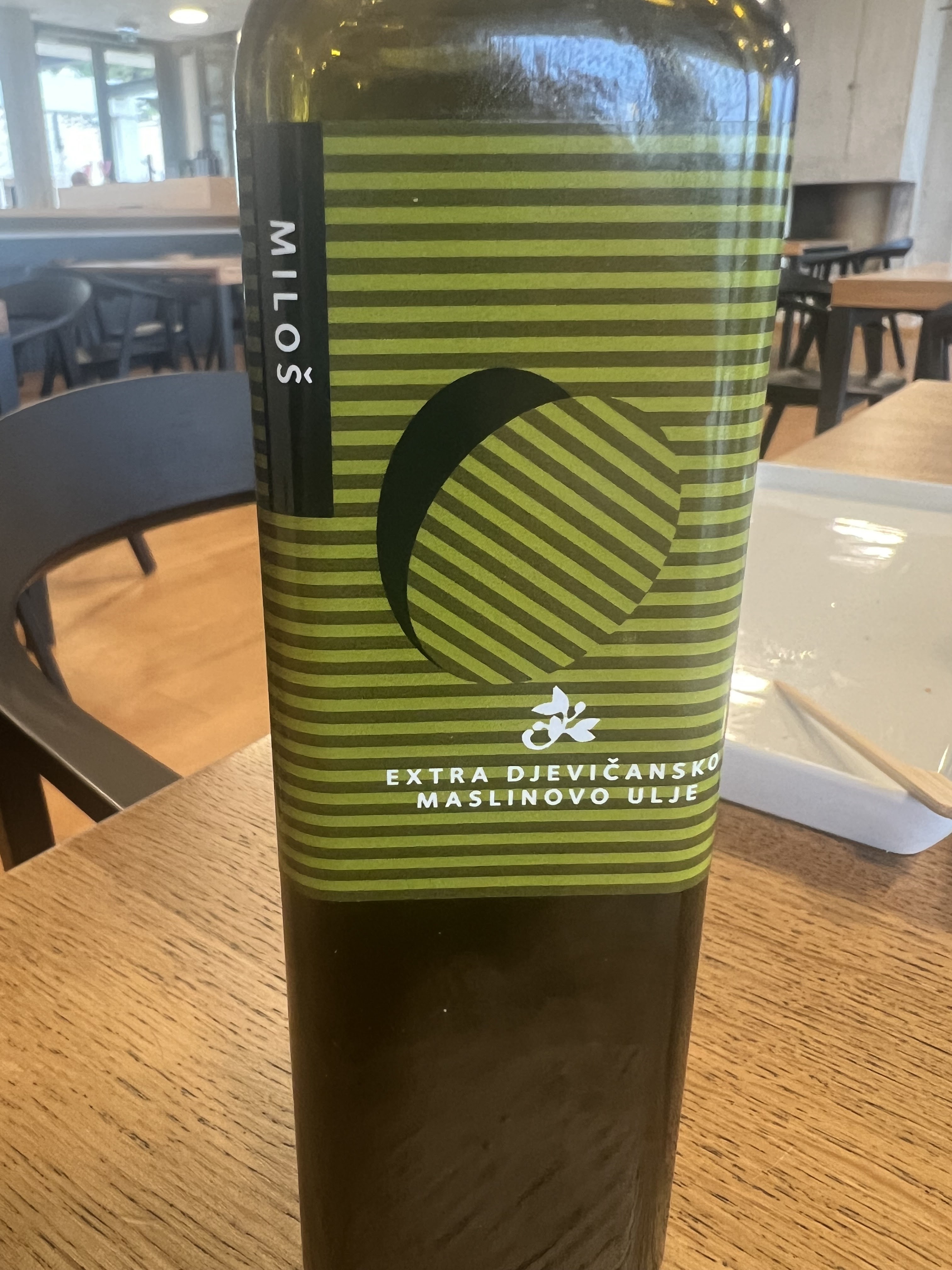
Miloš also produces awarded extra virgin olive oil and herbal tea. We were introduced to their olive oil during our visit. My understanding is that the Peljesac Peninsula is also known for its olive production.
Miloš Olive Oil © Spaswinefood

So happy that we discovered Miloš Stagnum, the first Croatian cult wine. It was the perfect rainy day escape.
Thank You Miloš Winery © Spaswinefood
Before leaving that day we toured the wine cellar and were given a brief overview of their wine production. My understanding is that their grapes are grown in organically on steep terraced land. After fermentation the wine is aged in 2000 liter Slavonian oak barrels, for a minimum of two to three years before bottling. The overall goal is to produce natural wines with a minimum of intervention.
Wine Cellar, Miloš Winery © Spaswinefood
Barrels for Aging, Miloš Winery © Spaswinefood
Checking Bedrock, Miloš Winery © Spaswinefood
A Closer Look at the Bedrock, Miloš Winery © Spaswinefood

Perhaps a little research on Miloš Winery on my part would have better prepared me for this visit. After all this family winery has a rich history. Grape growing and wine making has been part of the Miloš family, which has lived in Ponikva for 500 years. 
Thank You Miloš Winery © Spaswinefood

YES, that was the day I discovered Miloš Stagnum, the first Croatian cult wine. After visiting Miloš Winery our spring time travels continued through charming family-owned Pelješac Peninsula vineyards. Our wine journey would take us to Matuško Winery, Grgic Winery, and Saints Hills Winery. Checkout the latest Croatian wines available in US at: Croatian Premium Wine Imports. Special thanks to Mirena Bager at Croatian Premium Wine Imports for helping me plan our wine adventure. Also, a big thank you to Miloš Winery for accommodating us on short notice. We were delighted to be introduced to its wine history, and to discover its wines. I invite you to join me in my Croatian wine travels and elsewhere at Wine Travels with Dr. Sharon, and at Spaswinefood on Bluesky and  Facebook. I am so looking forward to sharing more on my Croatian vine-filled explorations.


Cheers


Sharon
April 2025
Pelješac Peninsula, Croatia
© Spaswinefood

Ston, Pelješac, Croatia © Spaswinefood
 Pelješac Peninsula, Croatia © Spaswinefood

Follow me on 
Bluesky and Facebook

I would highly recommend 
Kresimir Pehar, Dubrovnik 4 U Transfers for those who prefer a driver for your wine country travels. 


Always a pleasure to return to Tablas Creek Vineyard, Paso Robles

I am off to Greece and bringing with me some Tablas Creek wines.  Tablas Creek Vineyard,  one of  Paso Robles  premier wineries, was one of ...